

Introduction
Marketing has always evolved with technology. From television advertisements and websites to social media, smartphones, artificial intelligence, and immersive experiences, brands continuously search for better ways to capture consumer attention.
Now, Virtual Reality (VR) is emerging as another powerful marketing technology. Instead of simply watching an advertisement, customers can enter a digital environment, explore products, experience destinations, interact with virtual stores, or participate in immersive brand stories.
But an important question remains: Is Virtual Reality in marketing truly ready for primetime?
The answer is increasingly nuanced. VR offers enormous potential, but adoption still depends on hardware accessibility, production costs, consumer interest, and whether the experience delivers genuine value.
For forward-thinking brands, however, VR could become an important part of the next stage of digital transformation.
Table of Contents
What Is Virtual Reality Marketing?
Virtual Reality marketing uses immersive, computer-generated environments to create experiences that traditional advertising cannot easily reproduce.
Instead of presenting a product through a static image or conventional video, brands can allow consumers to interact with a simulated environment.
Examples of VR Marketing
A brand could use VR to:
- Create virtual product demonstrations
- Build immersive advertisements
- Offer virtual property tours
- Showcase travel destinations
- Create virtual showrooms
- Provide interactive product experiences
- Develop immersive training campaigns
- Organize virtual events
- Create branded games and experiences
The major difference is participation.
Traditional advertising asks consumers to watch. VR can invite them to experience.
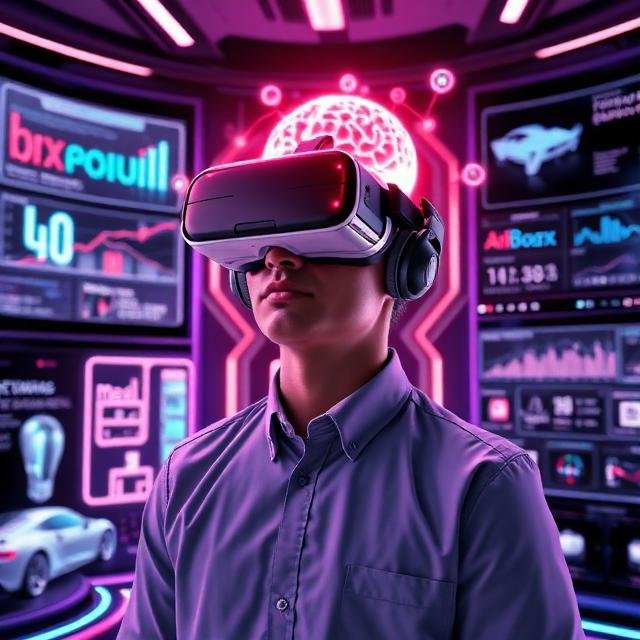
Why VR Is Becoming Important for Marketing
Virtual Reality Modern consumers are surrounded by advertisements across websites, apps, social media platforms, streaming services, and digital devices.
This creates an attention problem for marketers.
People may scroll past a conventional advertisement within seconds. An immersive experience, however, can create a stronger sense of presence and interaction.
1. Higher Engagement
Virtual Reality can encourage users to actively explore an environment instead of passively consuming content.
For example, a furniture company could create a virtual room where customers can walk around and visualize different furniture arrangements.
2. Emotional Experiences
Immersive environments can create stronger emotional connections with products and brands.
A travel company, for instance, could allow potential customers to experience a virtual preview of a destination before booking a trip.
3. Better Product Understanding
Some products are difficult to explain through traditional advertising.
VR can demonstrate how a complex product works through interactive visualization.
4. Memorable Brand Experiences
Creative VR campaigns can stand out because they provide something more interactive than a conventional advertisement.
How Different Industries Can Use VR Marketing
The opportunities for VR extend across multiple industries.
Retail and E-Commerce
Virtual showrooms could allow consumers to explore products in three-dimensional environments.
For example, a fashion retailer could create a virtual store where customers examine clothing collections and interact with digital product displays.
Real Estate
Real estate companies can provide immersive property tours.
Potential buyers could explore a home virtually before deciding whether to schedule an in-person visit.
Automotive
Car manufacturers can create virtual showrooms where users explore vehicle interiors, compare configurations, and experience different driving environments.
Travel and Hospitality
Hotels, resorts, airlines, and tourism companies can use immersive experiences to showcase destinations.
A potential traveler could virtually explore a hotel room, beach, restaurant, or attraction before making a booking decision.
Education
Educational organizations can create immersive learning environments that turn abstract concepts into interactive experiences.
Healthcare
VR-based marketing and education can help organizations explain complex procedures, facilities, and services in a more understandable way.
The Impact of Virtual Reality on Customer Experience
The biggest impact of Virtual Reality in marketing could be its ability to change the relationship between brands and consumers.
Traditional marketing generally follows a simple model:
Brand → Advertisement → Consumer
VR introduces a more interactive model:
Brand → Experience → Consumer Participation
This distinction matters.
When consumers actively explore an environment, they may spend more time interacting with the brand and developing a stronger understanding of the product.
However, immersive technology should not be used simply because it looks futuristic.
The experience needs to solve a genuine customer problem.
VR vs Traditional Digital Marketing
VR does not necessarily replace traditional marketing channels.
Instead, it can complement them.
| Marketing Method | Main Strength |
|---|---|
| Social Media | Reach and community engagement |
| Video Marketing | Storytelling and visual communication |
| Websites | Information and conversion |
| Mobile Apps | Convenience and personalization |
| AR | Real-world interactive experiences |
| VR | Immersion and presence |
A successful marketing strategy could combine multiple technologies.
For example:
Social Media → VR Preview → Website → Purchase
A short social media campaign could introduce a virtual experience, direct users to a VR environment, and then guide interested customers toward a purchase page.
The Role of AI and VR in Marketing
Artificial intelligence could significantly expand what marketers can accomplish with VR.
AI can potentially help brands create:
- Personalized virtual environments
- Intelligent virtual assistants
- Dynamic product recommendations
- Automated customer interactions
- Behavior analysis
- Personalized storytelling
- AI-generated virtual characters
Imagine entering a virtual store where an AI-powered assistant understands your preferences and helps you explore products.
This combination of AI and VR could make immersive marketing more personalized and scalable.
The future of technology may increasingly involve multiple technologies working together instead of operating independently.
VR and Digital Transformation
The adoption of immersive technologies is part of a broader digital transformation taking place across industries.
Businesses are moving from traditional physical experiences toward digital, interactive, and personalized customer journeys.
VR could contribute to this transformation by connecting:
- Digital commerce
- Customer experience
- Data analytics
- Artificial intelligence
- 3D visualization
- Virtual events
- Interactive storytelling
However, digital transformation should not mean adopting every new technology.
Companies need to determine whether VR actually improves their customer journey or business objectives.
Challenges of VR Marketing
Despite its potential, VR marketing faces several challenges.
1. Hardware Accessibility
Not every consumer owns a VR headset.
This limits the potential audience for campaigns that require dedicated VR hardware.
2. Development Costs
Creating high-quality 3D environments can require specialized designers, developers, artists, and technical infrastructure.
3. User Experience
Poorly designed VR experiences can cause discomfort, confusion, or motion sickness.
The experience needs to be intuitive and comfortable.
4. Consumer Adoption
Some consumers may not be interested in wearing a headset just to interact with an advertisement.
Brands need to offer genuine value rather than simply adding VR for novelty.
5. Measuring ROI
Traditional digital advertising provides familiar metrics such as clicks, impressions, conversions, and cost per acquisition.
Measuring the effectiveness of an immersive experience can be more complicated.
Marketers may need to analyze:
- Session duration
- Interaction rates
- Experience completion
- Product engagement
- Brand recall
- Conversion behavior
- Customer feedback
Opportunities for Businesses
Despite these challenges, VR presents significant opportunities.
Immersive Product Demonstrations
Businesses can demonstrate products in ways that traditional images cannot.
Virtual Events
Companies can create interactive events that connect audiences across geographic locations.
Experiential Advertising
Brands can transform advertisements into experiences rather than simple promotional messages.
Training and Education
Marketing teams can also use VR internally for product education, sales training, and customer service simulations.
Premium Brand Positioning
Luxury and technology brands may use sophisticated VR experiences to reinforce an innovative brand identity.
Future Trends in VR Marketing
VR marketing is likely to evolve as hardware, software, artificial intelligence, and connectivity improve.
1. AI-Powered Virtual Experiences
AI could make virtual environments more responsive and personalized.
2. Social VR Experiences
Future campaigns may allow groups of consumers to enter shared virtual spaces and interact with one another.
3. Virtual Commerce
Virtual stores could become more sophisticated, combining product exploration with digital purchasing.
4. Personalized Advertising
Instead of presenting identical experiences to everyone, brands may eventually create immersive environments based on individual interests.
5. VR and AR Convergence
The distinction between VR and augmented reality may become less important as mixed-reality devices become more capable.
6. More Accessible Hardware
As immersive hardware becomes easier to use and potentially more affordable, the audience for VR marketing could expand.
Is VR Marketing Ready for Primetime?
So, is VR marketing ready for primetime?
For every brand? No.
For selected industries and innovative campaigns? Absolutely.
VR is particularly valuable when the experience itself provides meaningful value.
It makes sense when customers benefit from:
- Exploring a physical environment remotely
- Understanding a complex product
- Experiencing a destination
- Visualizing a future purchase
- Participating in an interactive story
- Learning through simulation
It makes less sense when a simple image, video, website, or mobile experience can accomplish the same goal more efficiently.
The smartest marketers will therefore treat VR as a strategic tool rather than a replacement for traditional marketing.
How Businesses Can Start With VR Marketing
Companies interested in VR should avoid beginning with an expensive, complicated project.
A better approach is to start small.
Step 1: Identify the Customer Problem
Ask what customers currently struggle to understand, visualize, or experience.
Step 2: Define the Objective
Decide whether the goal is awareness, engagement, education, lead generation, sales, or customer retention.
Step 3: Build a Focused Experience
Create one useful immersive experience rather than an unnecessarily large virtual world.
Step 4: Test With Users
Collect feedback before launching the campaign at scale.
Step 5: Measure Performance
Track engagement and business outcomes to determine whether VR provides a meaningful return.
Conclusion
Virtual Reality has moved beyond being simply a futuristic entertainment technology. It is becoming an increasingly interesting tool for marketers looking to create immersive customer experiences.
Its biggest strength is the ability to turn audiences from passive viewers into active participants.
However, VR is not automatically effective simply because it is technologically advanced. High development costs, hardware requirements, user experience concerns, and ROI measurement remain important barriers.
The real opportunity lies in using VR when immersion creates genuine value.
As the future of technology brings together artificial intelligence, 3D environments, immersive hardware, analytics, and digital commerce, VR could become an important component of the next generation of marketing.
The question may eventually change from “Is VR ready for primetime?” to “Which customer experiences should be immersive?”
For brands that answer that question correctly, VR could become much more than a marketing experiment—it could become a powerful new way to connect with customers.