Introduction: The Future of Work Is Thought-Driven
Imagine sitting at your desk, thinking about drafting a report, and watching your screen fill with well-structured content without typing a single word. Or, picture controlling complex design software purely through your thoughts, skipping the need for a keyboard, mouse, or even voice commands.
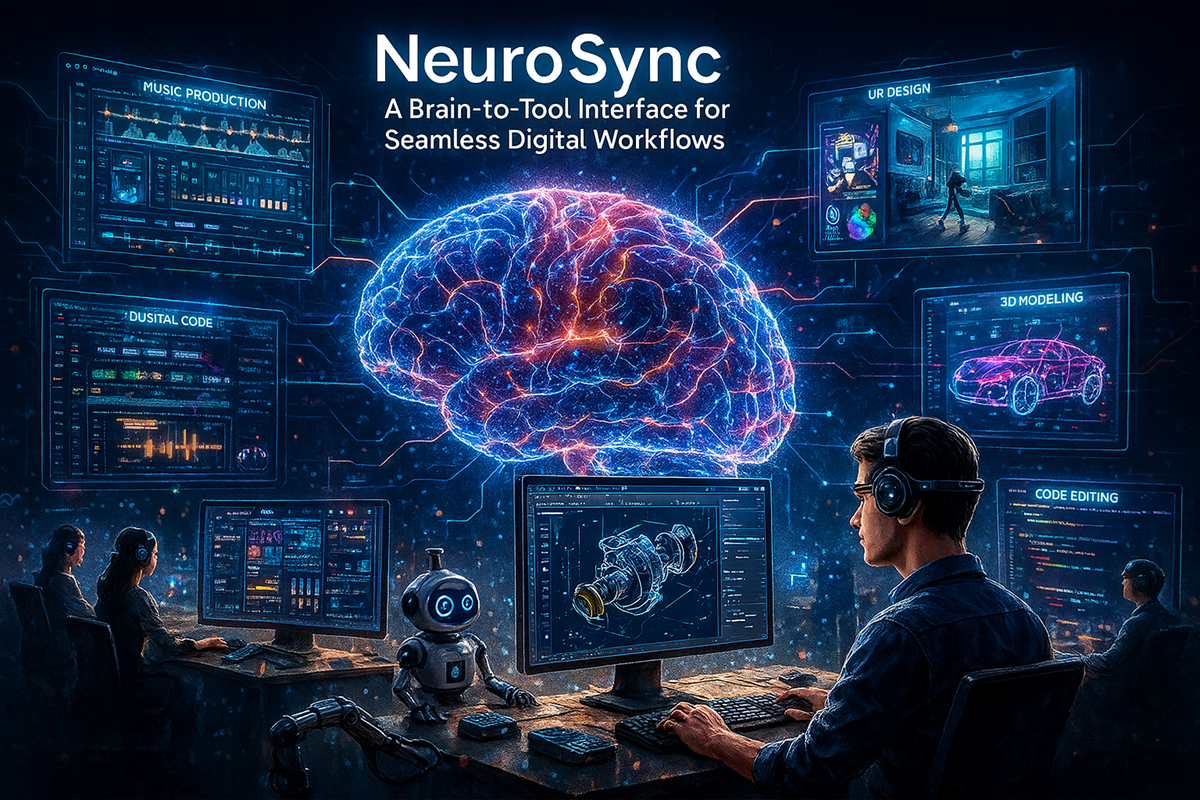
This is not science fiction anymore this is NeuroSync: A Brain-to-Tool Interface built to revolutionize how humans interact with technology. By merging neuroscience and digital workflow automation, NeuroSync is paving the way for seamless human-computer collaboration.
Table of Contents
What Is NeuroSync?
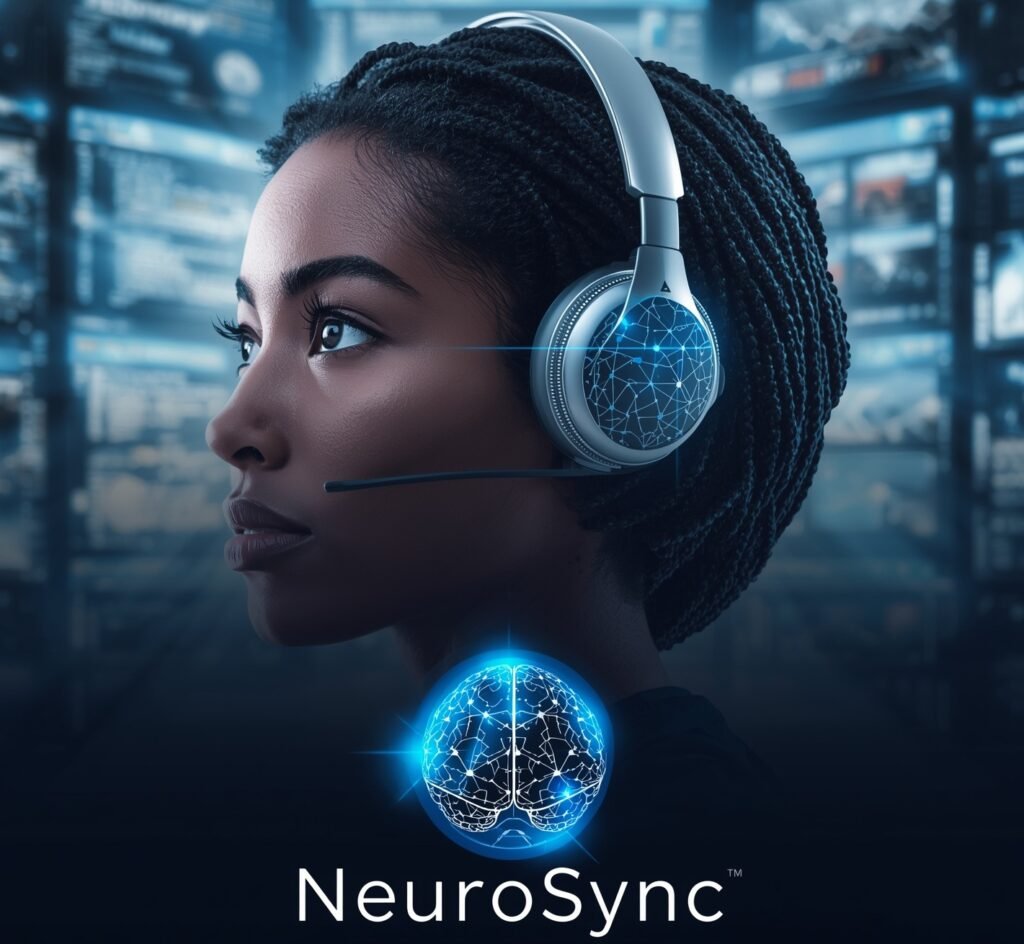
NeuroSync is a conceptual next-generation brain-to-tool interface (BTI) that allows users to directly connect their brain activity with digital platforms, tools, and applications. Unlike traditional human-computer interaction methods (keyboard, touch, or speech), NeuroSync interprets neural signals and translates them into actionable digital commands.
Think of it as a mind-powered universal connector for:
- Productivity tools (Google Docs, Microsoft Word, Notion)
- Creative platforms (Photoshop, Figma, Canva)
- Project management (Trello, Asana, Jira)
- Development tools (VS Code, GitHub, Automation platforms)
With NeuroSync, the workflow becomes thought-driven, real-time, and frictionless.
How Does NeuroSync Work?
The NeuroSync interface relies on three key technological pillars:
1. Neural Signal Capture
Advanced non-invasive neuroimaging headsets detect electrical brain patterns (EEG-based or fNIRS technology). These signals are decoded with AI algorithms to understand the user’s intention.
2. Cognitive-to-Digital Translation Layer
Once the brain’s signals are captured, NeuroSync’s AI layer translates them into structured commands. For example:
- Thinking “open email” launches your inbox.
- Imagining a chart creates it instantly in your Excel sheet.
- Visualizing a workflow diagram converts it into a digital flowchart.
3. Seamless Tool Integration
NeuroSync comes with universal APIs that integrate with digital ecosystems making your thoughts compatible with apps you use daily.
Why NeuroSync Is a Game-Changer
1. Speed and Efficiency
Typing 50 words per minute is no match for the brain’s processing speed. NeuroSync leverages pure thought, cutting repetitive manual work.
2. Elimination of Physical Barriers
Accessibility is a core advantage—people with disabilities or motor limitations can operate complex software effortlessly.
3. Seamless Workflow Automation
No more switching between tools manually. NeuroSync enables parallel task execution—drafting a report while automating emails, just by thought direction.
4. Enhanced Security
With biometric brainwave signatures, only your unique neural pattern can unlock your workflows—making it more secure than passwords or fingerprints.
Use Cases of NeuroSync in Real Life
- Corporate Productivity: Managers can visualize tasks, and NeuroSync instantly organizes them into Trello boards or Gantt charts.
- Design & Creativity: Artists imagine a concept, and the tool generates digital sketches in real time.
- Healthcare & Research: Surgeons could mentally interact with real-time diagnostic software without touching a screen.
- Software Development: Developers debug or deploy code by mentally instructing IDEs.
- Education & Learning: Students could access learning resources hands-free, guided by cognitive intent.
Challenges Ahead
While the concept of NeuroSync is revolutionary, challenges remain:
- Accuracy in decoding thoughts (avoiding false triggers).
- Data privacy for sensitive brainwave information.
- Cost & accessibility of neural headsets.
- Ethical concerns around cognitive surveillance.
However, ongoing progress in AI-driven neuroscience, brain-computer interfaces, and digital integration frameworks suggests these hurdles are solvable within the coming decade.
The Future of NeuroSync
Looking ahead, NeuroSync could evolve into:
- Cloud-based Brain Networks – allowing multiple users to collaborate using shared thought streams.
- AI-Augmented Creativity – combining human imagination with AI execution.
- Post-Screen Era Workflows – eliminating screens and physical interfaces entirely.
It’s not just a tool; it’s a paradigm shift in human-computer symbiosis.
Conclusion
NeuroSync is more than a futuristic idea—it represents the next leap in digital productivity. By bridging brain activity directly with tools, it promises to redefine workflows, eliminate friction, and empower humans to work at the speed of thought.
For businesses, creators, and knowledge workers, NeuroSync isn’t just an innovation—it’s the future of seamless digital interaction.