
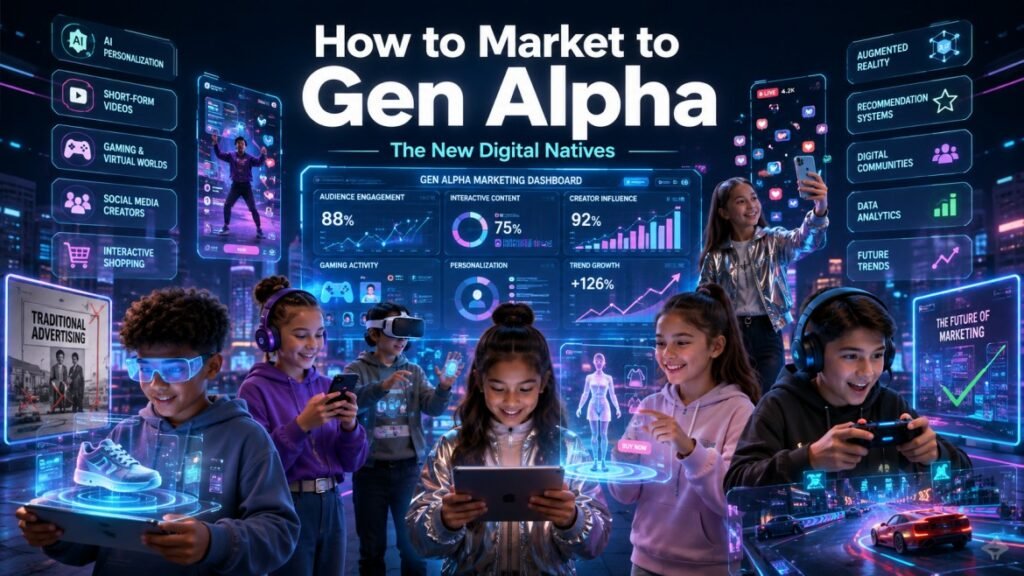
How to Market to Gen Alpha Gen Alpha is growing up in a world where smartphones, artificial intelligence, streaming platforms, gaming, and interactive technology are part of everyday life. Born roughly from the early 2010s onward, this generation has never experienced a world without digital technology.
For brands, this creates both an enormous opportunity and a major challenge. Traditional advertising techniques may not capture the attention of children and young teenagers who are accustomed to highly personalized, visual, fast-moving digital experiences.
Understanding How to Market to Gen Alpha requires more than simply creating content for younger audiences. Brands need to understand how this generation discovers information, interacts with technology, evaluates authenticity, and influences household purchasing decisions.
Table of Contents
Who Is Gen Alpha?
How to Market to Gen Alpha – Generation Alpha is the generation following Gen Z. While the exact birth-year boundaries vary, the term generally refers to children born during the 2010s and into the 2020s.
They are growing up surrounded by:
- Smartphones and tablets
- Artificial intelligence
- Short-form video
- Gaming platforms
- Voice assistants
- Streaming entertainment
- Interactive apps
- Virtual and augmented reality
- Personalized digital experiences
This environment is shaping their expectations from an early age. Digital interaction is not an additional activity for Gen Alpha—it is deeply integrated into education, entertainment, communication, and everyday discovery.
Why Gen Alpha Is Different
Digital Experiences Are Their Default
How to Market to Gen Alpha expects technology to be responsive and intuitive. They are comfortable switching between video, games, social platforms, search engines, and interactive applications.
A static advertisement may therefore struggle to compete with content that responds to users and encourages participation.
Visual Content Matters
Video, animation, gaming environments, memes, interactive graphics, and creator-led content can be more engaging than long blocks of traditional advertising copy.
Brands should prioritize storytelling that communicates an idea quickly while giving audiences a reason to interact.
Parents Still Matter
One of the biggest mistakes marketers can make is treating Gen Alpha as completely independent consumers.
Parents and guardians remain important decision-makers, particularly for education, technology, food, travel, financial products, and larger purchases.
Successful campaigns should therefore consider two audiences:
- The Gen Alpha audience that discovers and engages with the brand.
- The parents or guardians who may ultimately approve or purchase the product.
How to Market to Gen Alpha
So, How to Market to Gen Alpha effectively?
The answer starts with creating experiences rather than simply delivering advertisements.
1. Make Content Interactive
Gen Alpha has grown up tapping, swiping, clicking, creating, and playing.
Instead of only showing a product, brands can develop:
- Interactive quizzes
- Digital challenges
- Mini-games
- Polls
- Creative filters
- Educational activities
- Choose-your-own-story experiences
For example, a children’s educational brand could turn a lesson into an interactive adventure instead of presenting it as a conventional advertisement.
2. Think Video First
Short, visually engaging videos can help brands communicate ideas quickly.
However, simply producing more videos is not enough. The content should have a clear purpose and offer entertainment, education, inspiration, or useful information.
3. Use Creators Carefully
How to Market to Gen Alpha Young audiences increasingly encounter brands through creators and online communities.
Creator partnerships can make campaigns feel more natural, but brands should prioritize:
- Authenticity
- Age-appropriate content
- Trust
- Clear sponsorship disclosure
- Genuine relevance to the audience
A creator should fit the brand rather than being selected only because they have a large following.
4. Bring Gaming Into Marketing
Gaming is more than entertainment. It can become a powerful environment for storytelling, community building, and brand experiences.
Brands could explore:
- Branded virtual environments
- Interactive challenges
- Game-inspired campaigns
- Digital collectibles
- Educational gaming experiences
- Partnerships with gaming creators
The goal should be meaningful participation rather than interrupting gameplay with conventional advertising.
Personalization and AI
How to Market to Gen Alpha – Artificial intelligence is becoming increasingly important in digital marketing.
AI can help brands analyze audience behavior, identify content trends, personalize experiences, automate creative workflows, and improve campaign performance.
The future of technology will likely make digital experiences even more adaptive. AI-powered systems could create personalized learning, entertainment, shopping, and discovery experiences in real time.
However, personalization involving young audiences must be handled responsibly. Brands need strong privacy practices and should avoid exploiting sensitive behavioral information.
The Role of Digital Transformation
The rise of Gen Alpha is accelerating digital transformation across the marketing industry.
Companies can no longer think about digital marketing as simply running advertisements on websites or social media platforms. Modern marketing increasingly connects content, data, AI, gaming, creators, e-commerce, mobile experiences, and interactive technology.
The impact of this transformation includes:
- More personalized customer experiences
- Faster content production
- Greater use of AI
- More interactive campaigns
- New forms of brand storytelling
- Increased demand for privacy and transparency
Businesses that adapt early can develop stronger relationships with emerging audiences.
Challenges of Marketing to Gen Alpha
How to Market to Gen Alpha – Marketing to younger audiences comes with significant responsibilities.
Privacy and Data Protection
Children are particularly vulnerable to inappropriate data collection and manipulation. Brands must follow applicable privacy regulations and adopt strong safeguards.
Short Attention Windows
Digital audiences are exposed to enormous volumes of content. Brands need strong creative concepts to earn attention without relying on excessive stimulation.
Rapidly Changing Platforms
The platforms popular today may not dominate tomorrow.
Marketers need adaptable strategies rather than depending entirely on a single social network, gaming platform, or content format.
Authenticity
Young digital audiences can quickly identify content that feels artificial or overly promotional.
Brands need consistency between their marketing messages and their actual behavior.
Future Trends in Gen Alpha Marketing
AI-Powered Experiences
AI will increasingly support personalized content, virtual assistants, educational tools, recommendation systems, and interactive brand experiences.
Immersive Marketing
Augmented reality, virtual environments, and spatial computing could make marketing more experiential.
Instead of viewing an advertisement, users may interact directly with a digital product or environment.
Creator-Led Communities
Creators may become increasingly important as trusted bridges between brands and niche communities.
Interactive Commerce
Shopping could become more integrated with entertainment, gaming, video, and social experiences.
Education and Entertainment Convergence
Brands may increasingly combine learning and entertainment through gamification, interactive storytelling, and AI-powered experiences.
Opportunities for Brands
The emerging Gen Alpha market provides opportunities across numerous industries.
Businesses can create:
- Educational technology products
- Interactive entertainment
- Family-focused digital services
- Gaming experiences
- Creative learning platforms
- Personalized digital products
- Immersive brand experiences
- Responsible AI-powered tools
The biggest opportunity is not simply reaching Gen Alpha early. It is building a relationship based on value, trust, creativity, and responsible technology.
Examples of a Gen Alpha Marketing Strategy
Imagine a sportswear company launching a campaign for young audiences.
Instead of running a traditional advertisement, it could create a digital fitness challenge where participants complete age-appropriate activities, customize a virtual character, unlock educational content about healthy movement, and share achievements with friends.
Parents could receive transparent information about safety, privacy, product benefits, and the purpose of the campaign.
This approach combines entertainment, participation, education, technology, and responsible communication.
Best Practices for Marketers
When developing a Gen Alpha campaign, businesses should remember:
- Create experiences instead of interruptions.
- Prioritize video and visual storytelling.
- Make interaction a central part of campaigns.
- Use creators based on relevance and trust.
- Explore gaming and immersive technologies.
- Keep experiences age-appropriate.
- Protect children’s privacy.
- Communicate transparently with parents.
- Use AI responsibly.
- Continuously test new digital formats.
Final Thoughts
Gen Alpha represents a major shift in how brands need to think about future consumers. Their relationship with technology is fundamentally different because digital tools have been present throughout their childhood.
Learning How to Market to Gen Alpha therefore means understanding much more than demographics. It requires understanding digital behavior, interactive experiences, gaming, creators, AI, personalization, privacy, and the changing expectations of young audiences.
The impact of digital transformation will continue to reshape marketing as the future of technology introduces new ways for brands and consumers to interact.
Companies that combine creativity with responsibility will be better positioned to connect with Gen Alpha while building trust with the parents and communities that influence them.